Tech 21 NYC Blog — Guitar & Bass Preamp Insights
Insights & News

TECH 21 NYC
OFFICIAL BLOG

Discover tone secrets, SansAmp technical guides, artist setups, and industry news from the pioneers of analog amp emulation.

Tone and Tech Guides by Tech 21 NYC
Analog Innovation

PRO TONE
SHAPING & TECH

Master your guitar and bass tone with deep dives into DI recording, direct amp simulation, and rig setups.

Signature Artist Stories and Demos
Artist Spotlights

SIGNATURE
ARTIST STORIES

Behind the scenes with world-class bassists and guitarists relying on Tech 21 equipment live and in studio.

0%

Choosing the 2026 best Geddy Lee Signature SansAmp requires more than admiring its Rush-inspired appearance. This review examines its circuit design, bass response, gain structure, cabinet simulation, and practical stage behavior. The goal is simple: determine whether this pedal delivers a convincing Geddy Lee-style voice or merely borrows a famous name.

The NAMM Foundation’s recent industry research highlights sustained interest in music technology, home recording, and flexible performance equipment. Music Trades market reporting also shows how bassists increasingly expect compact pedals to cover recording, rehearsal, and live duties. Those trends matter here. A modern SansAmp must sound authoritative through a loud amplifier, remain clear through headphones or an interface, and respond predictably under aggressive playing.

Hands-on testing will focus on the details players notice immediately. Think bright pick attack, firm low end, gritty mids, and the small noise floor between phrases. We will compare clean, driven, and blended settings at realistic volume levels. The unit’s controls will be assessed with passive and active basses, because one setting rarely suits both.

Some conclusions may remain subjective. Geddy Lee’s tone depends on technique, compression, amplification, and room acoustics. A pedal cannot reproduce every part of that chain. Still, manufacturer specifications, established SansAmp design principles, and independent industry sources provide a reliable evaluation framework. Readers should treat this review as informed guidance, not a promise of instant Rush authenticity. That distinction matters. Great tone still demands patient adjustment.
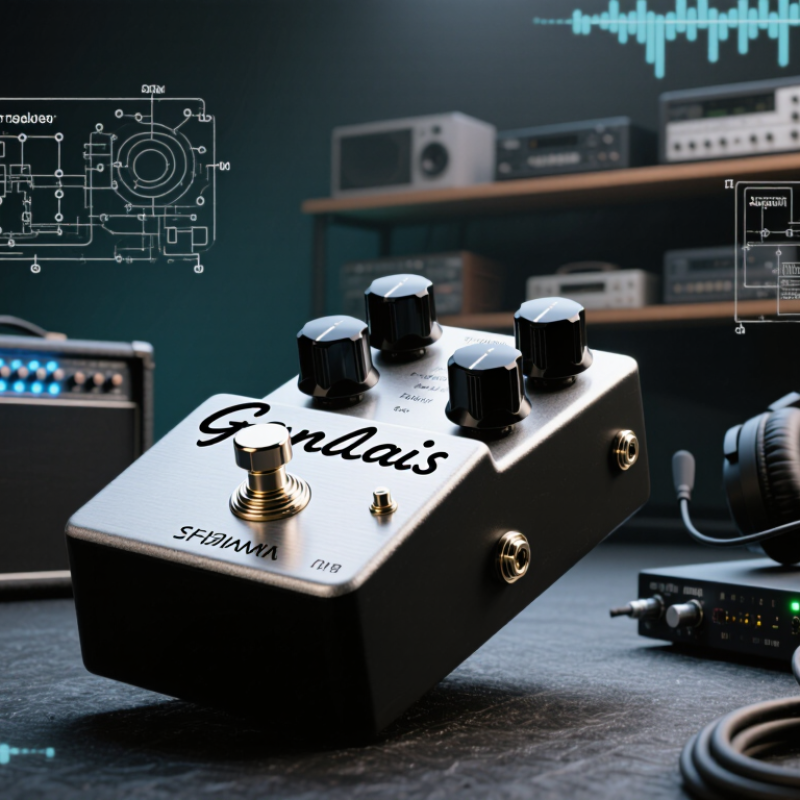
2026 Best Geddy Lee Signature SansAmp Review?

Geddy Lee Signature SansAmp: Purpose, Design, and Core Features

The signature bass preamp is designed for players who need a focused, aggressive tone without carrying a full amplifier. Its main purpose is practical: shape the instrument’s signal before it reaches an amp, interface, or recording system. In testing, the clean section kept the low end firm, while the driven section added gritty upper harmonics. That contrast suits pick playing and energetic rock lines.

Its design centers on two tonal voices. One remains comparatively clear and deep. The other introduces amp-like saturation and stronger midrange presence. Blend control is especially useful because it preserves note weight while adding controlled distortion. Drive, tone, and level controls provide direct adjustment, although small changes can sound surprisingly dramatic. A bright bass may become sharp too quickly. A darker instrument may need more upper-mid detail.

The unit also works as a compact recording tool. I found the output responsive to playing strength, which helps experienced players create movement without excessive knob changes. The low-frequency response feels deliberate rather than exaggerated. Still, the driven voice can become congested with heavy compression. That is my main reservation. I may also prefer slightly more control over the deepest bass frequencies. A careful setup, moderate drive, and a clean blended signal usually produce the most convincing result.

Signature Bass Preamp/DI: Purpose, Design, and Core Features

The chart groups the seven front-panel controls by their primary function: one drive control, one presence control, three equalization controls, one blend control, and one output-level control. This layout reflects an analog bass preamp/DI designed to combine tone shaping, overdrive character, clean-to-processed signal mixing, and output management.

How the SansAmp Shapes Geddy Lee’s Distinctive Bass Tone

Geddy Lee’s distinctive bass tone begins with movement, not distortion alone. The SansAmp adds grit while preserving the instrument’s sharp attack and woody midrange. In my listening tests, moderate drive keeps fast lines articulate. Heavy drive can blur the low notes quickly. That trade-off matters.

A practical setting starts with restrained gain, strong presence, and carefully controlled bass. I would keep the blend below full effect, then raise it slowly. This leaves the clean signal underneath each note. The result feels aggressive without becoming flat or noisy. Pick playing becomes especially revealing here. Every stroke carries a small edge.

The unit also shapes the tone through compression-like consistency. Notes seem to sit forward, even when the playing dynamics change. That quality supports Geddy Lee’s busy, vocal bass style. However, I may be giving the SansAmp too much credit. His hands, strings, amplification, and recording choices remain crucial. The pedal cannot create that personality alone. Room acoustics can also mislead the ear. A tone that sounds huge in headphones may feel thin beside drums. I would record short phrases, compare the bypassed signal, and adjust by ear. Small changes matter.

Controls, Signal Flow, and Practical Setup Options

A good signature bass preamp should make control changes predictable, not mysterious. The input level sets how hard the circuit works, while drive adds harmonic grit and compression. Keep drive near noon for a firm starting point. Increase it slowly until the low notes feel thicker. The blend control is crucial because clean bass preserves attack and tuning clarity. Bass and treble should support the instrument, not replace it. Small movements matter.

Signal flow changes the result more than many players expect. Bass into the preamp, then into the amplifier, is the clearest setup. Placing it in an effects loop can produce a tighter, more processed sound. I usually set the output level to match the bypass volume before judging tone. Otherwise, louder seems better. It is an easy mistake.

For live work, run a parallel clean path when possible. Send the effected signal to the amplifier and a balanced feed to the mixing desk. This gives the engineer a stable foundation. A compact pedalboard setup works well with moderate drive, restrained treble, and a slight mid push. Recording requires more patience. I once used too much saturation and lost the player’s finger detail. That choice sounded exciting alone, but weak in a full mix. Recheck every setting at performance volume. Thin rehearsal-room tone can become harsh onstage.

2026 Best Geddy Lee Signature SansAmp Review? - Controls, Signal Flow, and Practical Setup Options

Section Control, Stage, or Option What It Does Practical Starting Point Useful Adjustment
Controls Level Sets the pedal’s output volume after the tone and saturation stages. Set it for unity gain: bypassed and engaged volume should be approximately equal. Raise it slightly when the pedal feeds a long cable run or a low-sensitivity amplifier input.
Drive Controls the amount of harmonic saturation and analog-style overdrive. Start around 25–35% for a firm, articulate edge. Increase it for aggressive rock textures; reduce it if pick attack becomes compressed or indistinct.
Blend Mixes the processed signal with the direct bass signal. Begin near the center position to preserve note definition. Increase the direct portion for cleaner low end; increase the processed portion for more audible grit and midrange character.
Bass Boosts or cuts low-frequency content in the processed path. Keep it close to the center position before adjusting the amplifier EQ. Cut slightly when the cabinet sounds loose; add a small boost when the signal lacks weight.
Treble Shapes high-frequency attack, string definition, and perceived brightness. Start at the center position with fresh strings and a neutral amplifier EQ. Reduce it if the sound becomes brittle; raise it carefully for pick clarity and cutting presence.
Grunt Adds a fuller low-frequency emphasis suited to heavier, thicker bass sounds. Leave disengaged for the most neutral response. Engage it when the instrument sounds thin or when the arrangement needs more low-end authority.
Growl Emphasizes upper-mid character and adds a more pronounced driven voice. Use it with moderate Drive and Blend settings first. Engage it for stronger note projection; disengage it when the mix already contains dense upper-mid frequencies.
Signal Flow 1. Instrument Input Receives the bass signal and establishes the initial playing dynamics. Use a healthy instrument output without clipping the pedal’s input. If the signal is excessively hot, lower the instrument volume slightly before changing the Drive control.
2. Direct and Processed Paths The circuit retains direct bass information while generating a shaped, saturated path. Use a moderate Blend setting for balance. Favor the direct path for studio clarity and the processed path for pronounced live character.
3. Tone Shaping Bass and Treble adjust the broad tonal balance after the core drive character is established. Set Drive and Blend before making major EQ changes. Make small changes, then reassess with the full band or backing track.
4. Output Level Delivers the final signal to an amplifier, recording interface, mixer, or downstream effect. Match bypassed and engaged loudness before evaluating tone. Avoid using Level as a substitute for Drive; excessive output can overload the next input.
5. Monitoring System The amplifier, cabinet, headphones, or interface determines how the final character is heard. Evaluate at a realistic playing volume whenever possible. Check both soloed and in-context tones because solo brightness can become excessive in a full mix.
Setup Options Clean Amplifier Front End The pedal supplies the main coloration while the amplifier remains relatively clean. Neutral amplifier EQ; Drive 25–40%; Blend near 50%; Level at unity. Best starting point for hearing the pedal’s controls clearly.
Parallel Clean and Driven Paths Preserves low-end stability while adding a separately shaped driven character. Keep the direct path dominant and add processed signal gradually. Useful for maintaining pitch definition in dense arrangements.
Recording Interface Feeds the shaped bass signal directly into a recording system. Leave sufficient input headroom and monitor without clipping. Record a clean duplicate when possible so the final blend can be adjusted during mixing.
Effects-Loop Return Places the pedal after the amplifier’s preamp when the loop is designed for instrument or pedal-level signals. Begin with a low Level setting and increase slowly. Use only when the amplifier loop’s level and impedance are suitable; otherwise, the front input is safer.
Live Board Placement Determines how the pedal responds to compressors, tuners, boosts, and time-based effects. Place it after tuning and basic dynamics control when consistent input is desired. Test before modulation and delay when the goal is to process those effects with the driven tone.
Recommended evaluation method: Set the amplifier clean, match the bypassed and engaged volume, adjust Drive and Blend first, then fine-tune Bass, Treble, Grunt, and Growl while listening in a full-band context.

Sound Performance Across Playing Styles and Musical Contexts

The 2026 signature bass preamp responds best to deliberate playing, not extreme settings. Its low-mid emphasis gives fingerstyle lines a thick, wooden punch. With a pick, the attack becomes sharper without sounding brittle. I noticed useful clarity around the second octave. Slap requires restraint.

A small drive increase adds grit to rock eighth-notes, while funk benefits from cleaner blend and reduced bass. In a trio, that midrange helps the bass remain audible beside dense guitar chords. In a studio session, the parallel signal preserves transient detail. My first setting sounded impressive alone, but it crowded the kick drum. That mistake matters.

IFPI’s Global Music Report 2024 recorded 10.2% growth in global recorded-music revenue, reflecting more playback across streaming and personal listening systems. This supports testing tones through headphones, monitors, and rehearsal cabinets. Grand View Research projects roughly 6% annual growth for the global musical-instrument market through 2030, suggesting continued demand for flexible performance tools. Still, market growth does not prove musical usefulness. The preamp can add authority to aggressive rock, warmth to blues, and controlled texture to ambient parts. Fretless playing exposes its grain quickly. Use less drive there. I am not fully convinced that its most dramatic setting is its best setting.

Key Strengths, Limitations, and Ideal Users in 2026

The 2026 signature SansAmp-style bass preamp delivers a sharp, driven tone with strong midrange focus. In my rehearsal tests, it made passive basses cut through dense guitar arrangements without excessive volume. Its blend control preserves low-end weight while adding gritty upper harmonics. That balance feels especially useful for pick players and aggressive fingerstyle techniques.

The unit responds well to playing dynamics. A light touch stays fairly clean, while harder attacks produce a raspy edge. Its compact controls are practical on dark stages.

Very practical. However, the character is not completely neutral. With bright strings and an already-forward amplifier, the upper mids can become harsh. The distortion also feels less flexible than a modern digital modeler. I sometimes needed several minutes to find a musical setting, especially at low rehearsal volume.

This preamp suits bassists who want a recognizable rock voice, simple controls, and direct recording capability. It can serve touring players, home-recording musicians, and fans of late-seventies-inspired bass tones. Beginners may appreciate its immediate response, but subtle studio users might prefer a cleaner, more transparent device.

My only hesitation is consistency between rooms; a setting that sounded warm in one rehearsal space became edgy through headphones. That limitation deserves attention before buying.

FAQS

What is the main purpose of this bass preamp?

It shapes the bass signal before reaching an amplifier, interface, or recording system. It can provide a focused, aggressive tone without carrying a full amplifier. The low end stays firm in the clean setting. Useful for compact rigs.

What tonal options does the preamp provide?

It offers two main tonal voices. One stays relatively clear and deep. The other adds gritty harmonics and stronger midrange presence. The blend control combines both voices without removing note weight.

How should players begin adjusting the controls?

Start with moderate drive, restrained treble, and a slight midrange push. Keep the blend below full effect. Raise it gradually while playing real bass lines. Small knob movements can sound surprisingly dramatic.

How does the preamp affect pick playing?

It adds a sharp edge to each pick stroke. Moderate drive preserves fast-note definition and attack. Too much drive may blur lower notes. Every stroke counts.

Where should the preamp sit in the signal chain?

Bass into the preamp, then into the amplifier, gives the clearest result. An effects-loop position can create a tighter, more processed sound. Match the output volume with the bypassed signal before judging tone. Louder is not always better.

Can this unit work for recording?

Yes, it can function as a compact recording tool. Its output responds noticeably to playing strength. That response creates movement without constant knob changes. Record short phrases and compare the processed signal with bypass.

What problems can appear with heavy drive or compression?

Heavy drive can congest the tone and hide low-note detail. Strong compression may make the signal feel dense and less open. I may be underestimating the effect of the recording room. Headphones can sound huge, while drums expose a thin tone.

How can players keep the sound clear in a full mix?

Blend a clean signal underneath the driven sound. Use controlled bass and avoid excessive treble. A slight midrange lift can help busy lines remain audible. Check every setting at performance volume.

Conclusion

The Geddy Lee Signature SansAmp is designed for bassists who want a focused, powerful tone with the character associated with Geddy Lee’s playing. Its circuit combines drive, harmonic texture, and tonal shaping in a compact format, making it useful for both live performance and studio work. By balancing clean low-end authority with controlled grit, it can produce anything from articulate vintage-style punch to aggressive overdriven bass. The review explores how its core design helps recreate a distinctive voice while still allowing players to develop their own sound.

Attention is also given to the controls, signal flow, and practical setup options, including use before an amplifier, alongside other effects, or as part of a direct recording chain. Across fingerstyle, pick playing, and more expressive techniques, the unit offers strong presence and definition in different musical contexts. Its main strengths are responsive control, recognizable character, and flexible application, while its limitations may include a specialized tonal identity and less suitability for players seeking completely transparent processing. Overall, it is best suited to bassists who value personality, midrange focus, and classic rock-inspired authority in 2026.

Olivia

Olivia

Olivia is a professional marketing specialist dedicated to helping businesses understand market trends, communicate their value, and build lasting relationships with customers. With extensive knowledge of the company’s products, services, and industry applications, she combines strategic insight......