Tech 21 NYC Blog — Guitar & Bass Preamp Insights
Insights & News

TECH 21 NYC
OFFICIAL BLOG

Discover tone secrets, SansAmp technical guides, artist setups, and industry news from the pioneers of analog amp emulation.

Tone and Tech Guides by Tech 21 NYC
Analog Innovation

PRO TONE
SHAPING & TECH

Master your guitar and bass tone with deep dives into DI recording, direct amp simulation, and rig setups.

Signature Artist Stories and Demos
Artist Spotlights

SIGNATURE
ARTIST STORIES

Behind the scenes with world-class bassists and guitarists relying on Tech 21 equipment live and in studio.

0%

A Pro Audio Direct Box may look simple: one input, balanced output, and a ground-lift switch. On stage, however, it can determine whether a bass reaches the mixing console cleanly or arrives with hum, weak level, or lost detail. Buyers evaluating a China-based manufacturer should look beyond price and appearance. Transformer quality, input impedance, shielding, connector durability, and repeatable testing all matter.

Grand View Research estimated the global professional audio market at approximately US$3.8 billion in 2023, and projected a 5.7% compound annual growth rate from 2024 to 2030. This broader market estimate is not a direct-box sales figure. Still, it reflects continuing demand for reliable sound equipment across venues, studios, and live events. For buyers, the practical question is narrower: can a supplier deliver consistent units, clear specifications, and responsive technical support?

A useful assessment starts with evidence. Ask for frequency-response and noise measurements, transformer details, wiring diagrams, and samples tested with real instruments and long cable runs. Check how the enclosure handles repeated setup, transport, and rough handling. Small details count. A loose switch can spoil a dependable signal path. Factory claims also deserve verification through documented quality checks and sample inspection. No datasheet tells the whole story. Some specifications may look impressive, yet fail to describe performance on a noisy stage. This guide helps buyers compare Chinese manufacturers with practical criteria, while recognizing that the lowest quote is not always the best value.
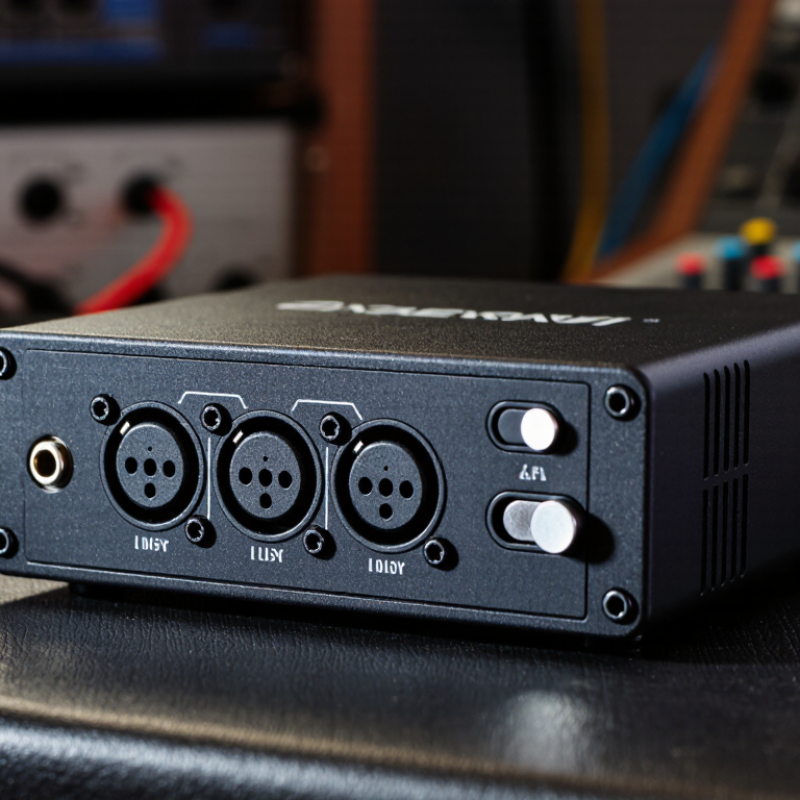
China Best Pro Audio Direct Box Manufacturer for Buyers

What a Pro Audio Direct Box Is and How It Works

A direct box, often called a DI, connects an instrument’s unbalanced output to a balanced microphone input. It converts impedance and signal format, helping a guitar or keyboard travel through a long XLR cable with less noise pickup. A common design pairs a high-impedance input near 1 MΩ with a low-impedance output around 150–600 Ω. The exact values vary. That detail matters when a passive pickup sounds dull or loses level through an unsuitable input.

Inside, an active circuit or transformer performs the conversion. A transformer-based unit can also provide galvanic isolation, which may help reduce hum from ground loops. AES48-2005, the Audio Engineering Society’s interconnection standard, addresses shielding and chassis grounding—important design details in professional audio connections. A DI does not magically improve every signal. Gain, cable quality, grounding, and the instrument’s output all affect the result. Listen closely.

In a live setup, the musician plugs a bass into the DI’s input, then sends its XLR output to the mixing console. Some units also pass the original signal to an amplifier. That makes stage routing easier, though it adds another connection to check. A quick test before the performance can reveal a weak battery, loose cable, or unexpected hum. The textbook explanation is tidy; real stages are less tidy.

Core Components and Signal Conversion Principles

A direct box begins with an instrument input, a conversion stage, and a balanced output. The input should preserve a pickup’s tone without loading it heavily. A common design target is around 1 MΩ for passive instruments, though the best value depends on the source. A transformer then changes the signal’s impedance and balances it for a long cable run. Its turns ratio matters:

a 10:1 ratio transforms impedance by a factor of 100, not 10. That detail is easy to miss.

Transformer models can also differ in low-frequency response and transient behavior. Active direct boxes use electronic circuits instead of relying only on a transformer. They can provide high input impedance and, in some designs, phantom-powered operation. Both types need careful grounding and shielding.

AES48-2019 describes grounding and shielding practices for professional audio equipment, while AES3-2009 (reaffirmed 2019) specifies digital audio transmission, including common 48 kHz sampling and word lengths up to 24 bits. Those figures apply to the digital stage downstream, not to the direct box itself. At 48 kHz, the Nyquist limit is 24 kHz, so suitable filtering is essential before conversion. A specification sheet rarely tells the whole story; listening with the actual instrument and cable remains worthwhile.

Passive and Active Direct Boxes: Types and Applications

Passive DI uses a transformer to balance an unbalanced instrument signal and help isolate it from hum. No battery is needed. It can work well with keyboards, active basses, and other sources with a strong output. With a quiet, high-impedance passive guitar, however, some models may reduce high-frequency detail.

Active DI needs battery power or phantom power from a mixing console. Its high-impedance input is often a better match for passive pickups, including acoustic instruments with piezo pickups. The signal can stay clearer before travelling through a long cable to the console. Some active models also accept keyboard or line-level signals, but check their input limits and pad settings.

The rule is useful, but not perfect. Room wiring, cable length, and instrument output all matter. During setup, listen for hum and compare the instrument’s sound through an amplifier and the console. A ground lift may help with a hum loop, but it is not a substitute for proper electrical safety. Choosing a DI is less about “passive versus active” alone and more about matching the input to the source.

Key Quality Standards for Direct Box Manufacturers in China

A dependable direct box should perform consistently across different instruments, cables, and stage conditions. Buyers can ask manufacturers for measured input impedance, frequency response, and distortion data, rather than relying on broad claims. Test results should identify the test method and operating conditions. Numbers without context are difficult to compare.

Isolation quality deserves close attention. A transformer-isolated model should be checked for unwanted hum, audible noise, and signal loss at low frequencies. Ground-lift switching should work smoothly and predictably. Small details matter. Inspect connector fit, switch feel, solder joints, and enclosure edges on production samples. These reveal workmanship that a specification sheet may miss. Not always easy.

Reliable manufacturers in China should document incoming component checks, in-process inspections, and final functional tests. Ask how they control variation between samples and larger batches. A useful report may record polarity, noise, frequency response, and switch operation for each tested unit. Requesting a sample under realistic load conditions can expose issues early. The first unit may be excellent; consistency is the harder part. Buyers should also confirm that packaging protects connectors and switches during shipping. One caution: testing claims are only as useful as the methods behind them, so request clear records and verify key results independently when practical.

How Buyers Can Evaluate and Select a Chinese Manufacturer

Choosing a Chinese direct box manufacturer takes more than comparing unit prices. Ask for a current product specification covering transformer type, impedance, connectors, grounding options, and rated input level. Match those details to the intended use, such as stage, studio, or installed sound. A low quote means little if hum appears under load. Check carefully.

Request samples from the same production line planned for your order, not only a hand-selected demonstration unit. Test each unit with instruments and cables your customers will actually use. Listen for noise, inspect switches and jacks, and record results across several units. Ask how the factory controls soldering, transformer sourcing, final inspection, and batch traceability. Clear answers matter. Vague assurances do not.

Evaluate communication with a practical question: can the supplier explain a failed test and describe corrective action? Review sample lead times, packaging, replacement-part availability, and the process for handling defects. Confirm drawings, labeling, and agreed tolerances in writing before production begins. A factory visit or independent inspection can add useful evidence, especially for a first order. Still, no checklist catches every variation; recheck early production units before approving a large shipment. That extra pause can feel inconvenient.

China Best Pro Audio Direct Box Manufacturer for Buyers - How Buyers Can Evaluate and Select a Chinese Manufacturer

Evaluation Area What Buyers Should Check Evidence to Request Practical Selection Guidance
Product and application fit Confirm whether the direct box is passive or active, mono or stereo, and suitable for the intended source, such as an instrument, keyboard, or playback device. Product datasheet, operating instructions, connection diagram, and a sample configured for the intended use. Match the input type, connector layout, power requirements, and use case before comparing prices.
Electrical performance Review input impedance, output impedance, frequency response, maximum input level, noise, distortion, and, where relevant, pad attenuation. Datasheet with units and test conditions; sample test results or independent laboratory measurements when available. Compare like-for-like specifications. A frequency-response figure or distortion value is meaningful only when its measurement conditions are stated.
Balanced output and connections Check the balanced XLR output, input connector type, through output, polarity, and connector mounting. Confirm compatibility with the buyer’s cables and equipment. Wiring diagram, connector specification, product photographs, and a functional sample. Verify pin assignment and through-output behavior in writing; do not rely on appearance alone.
Power and protection features For active models, confirm the power method, supported voltage range, current draw, and whether 48 V phantom power is supported. Check ground-lift and pad-switch operation where offered. Electrical specifications, user manual, and sample verification with the intended mixer or interface. Confirm that phantom-power behavior and switch functions are documented. Feature availability varies by model.
Build quality and durability Inspect enclosure strength, finish, switch feel, connector retention, strain relief, internal assembly, and resistance to handling during transport and stage use. Production sample, assembly photographs, inspection records, and details of materials and components. Evaluate a sample under realistic handling conditions and agree on visual and functional acceptance standards.
Quality management and testing Ask how incoming components, in-process assembly, and finished units are checked. Determine whether test procedures cover relevant electrical and functional characteristics. Quality-control flow, example inspection checklist, calibration information for test equipment, and applicable certificates if claimed. Check the scope and validity of any certificate independently. A certificate alone does not establish the performance of a specific product.
Customization and engineering support Discuss enclosure artwork, labels, packaging, connector options, circuit changes, and the approval process for revisions. Written specification, drawings or artwork proof, revision history, and a pre-production sample where appropriate. Document every approved change and identify who is responsible for confirming that samples match the final specification.
Sample evaluation Test the unit with the intended instruments, cables, mixer, and stage or studio setup. Listen for unwanted noise and check level, switching, and connections. Sample, test notes, and a clear method for reporting and resolving any issues. Approve samples against written requirements before placing a production order; one sample may not represent every production unit.
Manufacturing capacity and lead time Ask about production planning, component sourcing, capacity, order scheduling, and how delays or component substitutions are handled. Written production schedule, order milestones, and a change-notification procedure. Lead times and capacity depend on the product and order size. Confirm dates for the specific order rather than relying on general estimates.
Minimum order and commercial terms Clarify minimum order quantity, sample charges, tooling or setup costs, payment terms, packaging, shipping terms, and quotation validity. Itemized quotation, pro forma invoice, packaging details, and written agreement on shipping responsibilities. Compare the full landed-cost assumptions, not just the unit price. Commercial terms are negotiable and vary by supplier and order.
Compliance and documentation Identify the destination market and determine which safety, electromagnetic compatibility, labeling, or other requirements apply to the product and its power supply. Applicable test reports, declarations, labels, and supporting documentation for the exact model and configuration. Requirements depend on the product and market. Verify document scope and validity; do not assume that one approval covers every model or region.
Warranty and after-sales support Agree on warranty duration, defect reporting, repair or replacement procedures, spare parts, and response expectations. Written warranty terms, service contact details, and a process for handling quality claims. Make remedies, claim evidence, and responsibility for return shipping clear before confirming the order.

Specifications, pricing, minimum order quantities, and lead times vary by model, order, and supplier. Confirm all requirements and acceptance criteria in writing before production.

FAQS

What does a direct box do?

It connects an instrument’s unbalanced output to a balanced microphone input. This can reduce noise on long XLR cable runs.

How does a direct box convert the signal?

An active circuit or transformer changes the signal’s impedance and format. Exact input and output values vary.

What impedance should I look for?

A common design has an input near 1 MΩ and an output around 150–600 Ω. Match it to the instrument.

Can a direct box reduce hum?

A transformer-based model can provide galvanic isolation, which may help with ground-loop hum. It will not fix every noise problem.

How is a direct box connected on stage?

Plug the instrument into the input, then connect the XLR output to the mixing console. Some units also pass signal to an amplifier.

What should I test in a sample unit?

Use familiar instruments and cables. Check noise, switches, jacks, and several units from the intended production line.

What details should I request from a manufacturer?

Ask for specifications covering transformer type, impedance, connectors, grounding options, and rated input level. Get agreed tolerances in writing.

How can I check a factory’s quality process?

Ask about soldering, transformer sourcing, final inspection, and batch traceability. Request corrective actions for failed tests. Vague answers are a warning.

Is a sample test enough before a large order?

Not always. Recheck early production units and consider an independent inspection. We may still miss something.

Conclusion

A Pro Audio Direct Box converts the unbalanced, high-impedance output of an instrument into a balanced, low-impedance signal that can travel through long cables with less noise and connect reliably to a mixing console or audio interface. Its core components typically include input and output connections, impedance-matching circuitry or a transformer, and—in active designs—an electronic circuit and power source. These elements shape how the signal is converted and isolated.

Passive direct boxes use transformers and generally suit instruments with strong outputs, while active models use powered circuitry and can better accommodate weaker signals. When assessing manufacturers in China, buyers should examine component quality, electrical performance, noise control, durability, safety practices, and consistency between production batches. Clear technical specifications, sample testing, responsive communication, production capability, and dependable quality-control procedures can help buyers compare suppliers and choose a manufacturer suited to their audio equipment and application needs.

Evelyn

Evelyn

Evelyn is a dedicated marketing professional with a deep understanding of the company’s products, customers, and industry trends. With a strong background in strategic communication and content development, Evelyn creates clear, practical, and insightful articles for the company’s professional......