Insights & News
TECH 21 NYC
TECH 21 NYC
OFFICIAL BLOG
Discover tone secrets, SansAmp technical guides, artist setups, and industry news from the pioneers of analog amp emulation.


Choosing a China-based supplier for bulk SansAmp XB Driver orders requires more than comparing unit prices. Buyers need consistent sound, traceable production, secure packaging, and realistic delivery schedules. The product should respond naturally to guitar dynamics, from soft fingerpicking to stronger bridge attacks. Small details matter.
Andrew Barta, founder of Tech 21, is widely associated with this practical principle: “Great tone should serve the player, not hide the player.” That idea remains useful when evaluating suppliers. A dependable factory should understand enclosure quality, circuit consistency, footswitch durability, and noise control. It should also provide clear samples before large-scale production begins.
Look closely at the evidence. Ask for recent batch photographs, component specifications, inspection records, and sample-testing procedures. Request a physical unit, not only polished catalog images. Check how the SansAmp XB Driver performs through headphones, an amplifier, and a direct recording interface. Results may vary.
That variation deserves attention. Some suppliers may promise identical performance while changing components without notice. Others may offer attractive quotations but weak after-sales communication. A serious supplier explains its limitations honestly. It confirms minimum order quantities, lead times, carton dimensions, warranty terms, and customization boundaries in writing.
For importers, distributors, and music retailers, reliability is part of product value. A lower price means little if several units arrive with uneven response or damaged controls. China has capable electronics manufacturers, but capability must be verified. Samples, documentation, and independent inspections reduce uncertainty. No supplier is perfect. Careful review still prevents expensive surprises.
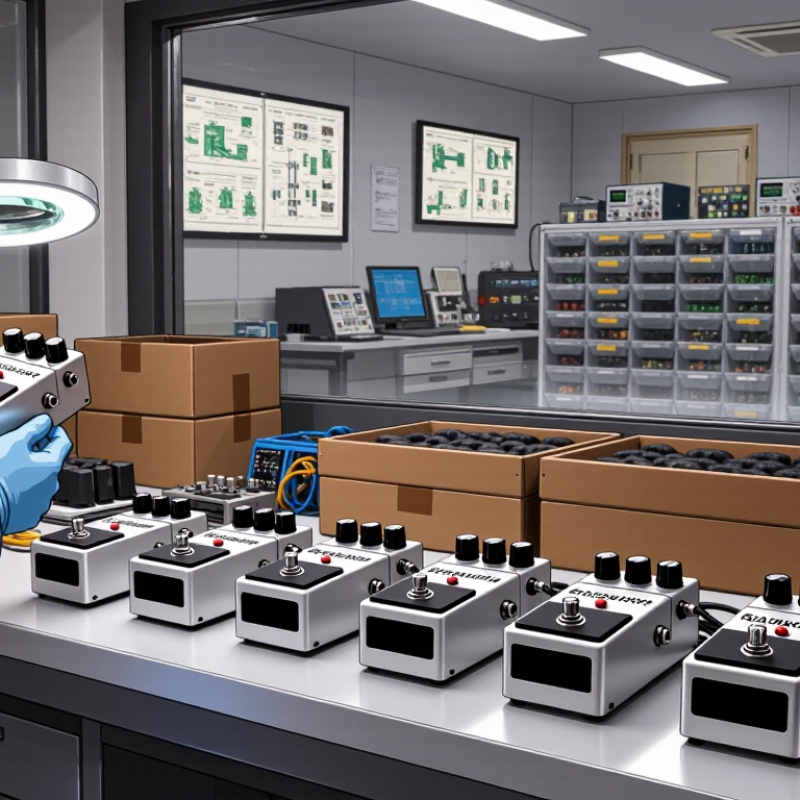
China’s SansAmp XB driver supplier landscape is broad, but quality varies sharply between factories. UNIDO’s International Yearbook of Industrial Statistics 2024 reports that China produced about 31% of global manufacturing value in 2023. This scale supports competitive pricing and flexible production. It does not guarantee consistent driver performance.
For bulk procurement, buyers should compare engineering depth, not only unit cost. Request circuit samples, noise-floor results, thermal run-in records, and connector drawings. A capable supplier should explain tolerance control, enclosure fit, firmware handling, and batch traceability. The World Bank’s 2023 Logistics Performance Index ranked China 19th globally, supporting reliable export planning. However, port efficiency can still change by season. A spreadsheet can look perfect. Factory evidence matters more. I would not approve a large order from a polished quotation alone.
Tips: Ask for three sample units from different production batches. Test output stability, grounding noise, heat buildup, and switching response. Confirm MOQ, replacement terms, inspection points, and carton protection in writing. Use an independent pre-shipment inspection when the order value is significant. Suppliers that resist basic test documentation deserve caution. One weakness remains: many online listings provide limited information about actual component sourcing. That gap makes technical audits essential, even when the supplier has years of export experience.
Indicative China supplier landscape for bulk procurement of XB-style analog bass driver pedals and comparable custom-manufactured units
| Supplier Segment | Typical Manufacturing Region | Typical Order Volume | Indicative MOQ | Typical Production Lead Time | Customization Scope | Common Quality Documentation | Bulk Procurement Considerations |
|---|---|---|---|---|---|---|---|
| Established pedal manufacturers | Guangdong and Zhejiang | 500–5,000 units per purchase order | 100–300 units for standard models; 300–1,000 for customized production | 30–60 calendar days after approved samples and deposit | Enclosure artwork, packaging, footswitch configuration, color, labeling, and selected component substitutions | Incoming inspection records, production test reports, final inspection checklist, and material declarations when requested | Best suited to repeat orders; confirm ownership of artwork, tooling charges, spare-parts policy, and change-control procedures |
| OEM/ODM audio-electronics factories | Shenzhen, Dongguan, and Huizhou | 1,000–20,000 units per purchase order | 300–1,000 units for a new customized program | 45–75 calendar days, excluding tooling and certification work | PCB layout, enclosure design, firmware-free analog circuits, packaging, labeling, and test fixtures | Bill of materials, assembly drawings, test specifications, sample approval records, and batch traceability | Suitable for private-label programs; require a detailed engineering validation plan and golden-sample approval before mass production |
| Mid-sized contract assemblers | Jiangsu, Zhejiang, and Fujian | 200–3,000 units per order | 50–200 units for approved designs; 200–500 for new builds | 20–45 calendar days when components are available | Assembly, testing, packaging, cable accessories, and limited enclosure changes | Assembly inspection reports, electrical safety test records, and supplier component certificates | Useful for buyers with completed designs; component availability and customer-supplied parts can materially affect delivery time |
| Small-batch specialist workshops | Guangdong and Fujian | 50–500 units per order | 20–100 units | 15–35 calendar days for standard builds | Small-run artwork, enclosure finishing, component selection, and manual calibration | Basic functional test sheets, sample photos, and packing records | Flexible for market testing but usually has higher unit cost, lower automation, and greater capacity variability |
| Component-integrated assembly partners | Shenzhen and Dongguan | 1,000–10,000 units per order | 500–2,000 units | 35–65 calendar days, depending on PCB and enclosure sourcing | PCB assembly, through-hole and surface-mount production, enclosure integration, and automated testing | PCB inspection data, automated optical inspection records, electrical test results, and lot traceability | Appropriate for stable designs; verify approved-vendor lists, counterfeit-component controls, and continuity of supply |
| Export-oriented private-label suppliers | Guangdong and Zhejiang | 300–8,000 units per order | 100–500 units | 30–60 calendar days | Brand-neutral packaging, multilingual manuals, labeling, carton configuration, and export documentation | Pre-shipment inspection reports, carton drop-test records, packing lists, and declarations of conformity where applicable | Confirm destination-market labeling, plug and adapter requirements, packaging language, warranty handling, and after-sales replacement terms |
A practical MOQ often starts at 100 units. This lets buyers test consistency without excessive inventory. Smaller trials may still be worth discussing.
Standard production often requires 18 to 25 working days. The period begins after artwork, specifications, and payment are confirmed. Custom packaging may add about five days. Schedules can slip.
A yield rate near 98% suggests stable process control. Ask for monthly yield reports and defect categories. Corrective-action records are useful, too. Numbers need evidence.
Inspection should cover power output, signal response, noise, finish, labels, and accessories. Test results should include unit numbers and batch codes. Random checks alone may miss sensitive faults.
No inspection system is perfect. Rushed peak-season schedules can reduce attention. A second review before shipment adds protection. Human error remains possible.
Confirm pre-production samples and written specifications. Request carton drop testing and replacement procedures. A sample may look excellent, but larger batches can differ.
Pricing may depend on circuit specifications, housing materials, tooling, testing, and packaging. Component costs can change during production. Ask for a validity period and one-time charge breakdown. Cheap quotes deserve questions.
Export cartons may use molded inserts, moisture protection, corner reinforcement, and barcode labels. Custom color boxes support presentation. Neutral cartons can reduce handling risks and costs. Drop tests have limits.
It should state coverage, exclusions, response time, and replacement procedures. Batch numbers and production records simplify claim verification. Unclear terms create avoidable disputes.
Common documents include inspection reports, commercial invoices, packing lists, and certificates of origin. HS code details and applicable test documents may also be needed. Declarations must match the actual goods and destination rules. One missing detail can delay clearance.
This guide examines the supplier landscape for SansAmp XB Driver products in China, with a focus on reliable sourcing for bulk procurement. It explains how buyers can compare core specifications, including a 20 Hz–20 kHz frequency response, total harmonic distortion plus noise (THD+N) testing, production consistency, and application suitability. Supplier verification should include documented quality systems, RoHS compliance, and relevant IEC 60268-3 testing or evaluation records where applicable.
For large orders, purchasing teams should assess minimum order quantity, production lead time, yield rate, and the availability of 100% quality inspection before shipment. The guide also highlights the importance of transparent OEM pricing, protective packaging, warranty terms, and complete export documentation. By reviewing these factors together, buyers can reduce procurement risk, improve delivery planning, and select a capable manufacturing partner for consistent SansAmp XB Driver supply.